

Lessons from the Liminal : Rooted in Resilience
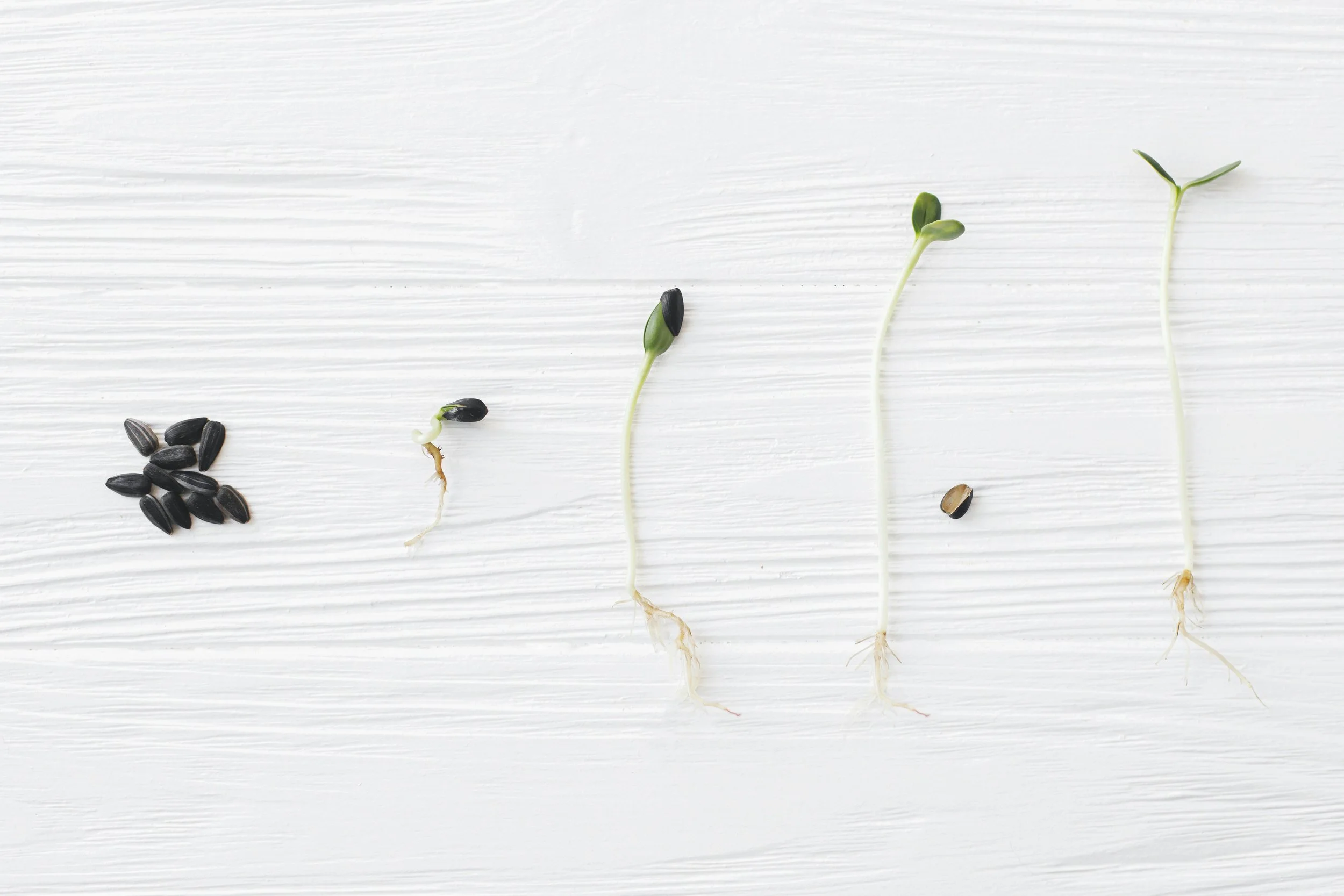
My favorite thing about plants is their resilience. Even when I haven’t been the most attentive caretaker, they somehow find a way to push through the hard seasons and root themselves again. They are steady teachers of what it means to endure.
A few years ago, when my husband and I bought our first house, I was determined to learn how to care for the shrubs in our flower beds. On both sides of the house stood these beautiful spring-flowering bushes with deep red leaves in summer and soft blooms in spring. I studied pruning videos, built up my courage, and finally decided I was ready.
We bought new trimmers. I handed them to my husband and said, “Wait for me. I’ll be right back.” My husband, ever helpful and eager to lighten my load, heard that as “go ahead and start.” By the time I stepped outside, the middle of the shrub was… gone. Completely. A dramatic red “U,” standing there like it had lost a battle it never signed up for.
I was furious. My husband was endlessly apologetic. Eventually we accepted that it was what it was and just hoped it would grow back.
But here’s where he accidentally became the hero of this story.
Months later, that U-shaped shrub grew back better than the one I had carefully, gently pruned on the other side. Where there had been this hollow space, new branches filled in. New life. New shape. It looked healthier, fuller, and somehow intentional. As if he had seen a vision the rest of us couldn’t.
The shrub was pruned hard and it came back even more beautiful.
That little shrub taught me something I return to often: life will prune you without asking. Sometimes so sharply it feels like whole pieces of you are missing. But pruning isn’t punishment, it’s preparation. What looks like loss is often the clearing needed for new growth, new vision, and new strength.
Later, emboldened by that lesson, we cut our overgrown Rose of Sharon back to almost a third of its size. And again, the pattern held. It returned fuller, healthier, and more generous with its blooms.
Plants know what we forget, growth isn’t a straight line. It’s a cycle of expansion and retreat, fullness and emptiness, bloom and rest. In the liminal spaces and the in-between places where things look bare, uncertain, or undone, something essential is happening beneath the surface.
Sometimes the becoming begins with the pruning.
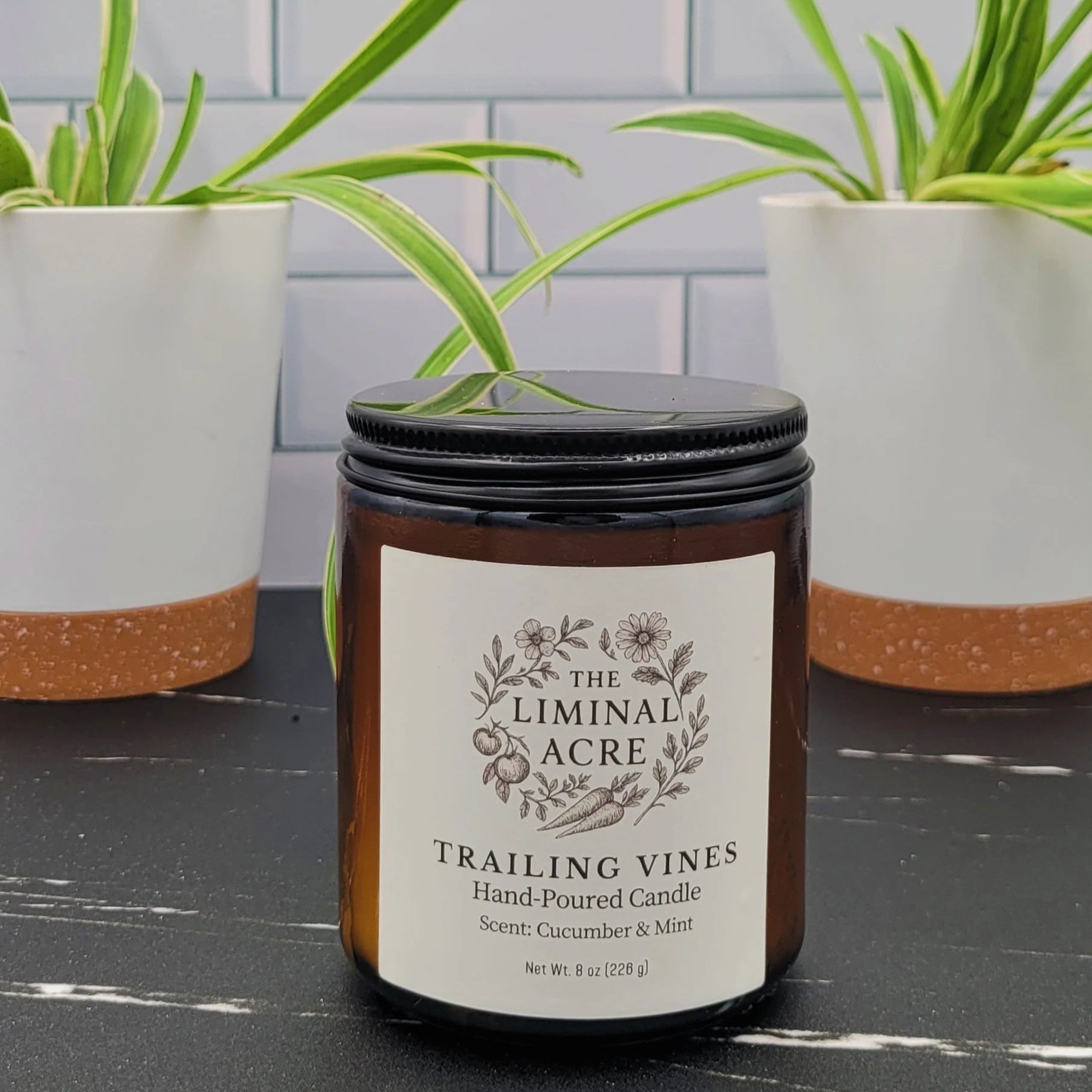
Scent: Cucumber & Mint
Cool as a cucumber, fresh as mint.
This candle is more than a scent, it’s a slow-made ritual. Hand-poured in small batches at The Liminal Acre using a blend of beeswax and sustainable lard rendered right here on our farm. The lard is a byproduct of our pork, an old-world ingredient brought back to life, reducing waste and honoring the whole animal.
Every pour is intentional. Every wick is placed by hand. We don’t batch thousands at a time—we craft each one like it matters. Because it does.
Clean-burning, richly fragrant, and rooted in the belief that what we make should reflect how we live: simply, sustainably, and with just enough grit to keep it honest.
And when the flame’s burned down, your jar still has life left. All of our labels are removable. No sticky residue, no soaking required so you can easily reuse the container for whatever suits you.
Scented with Phthalate-Free Fragrance Oils.